Chester Cathedral

In 1092 Hugh, 1st Earl of Chester, founded St Werburgh?s Abbey on the site where a Saxon church had stood for over 200 years.. He enlisted the help of his great friend St Anselm, the Abbot of Bec in Normandy - who later went on to become Archbishop of Canterbury ? and together they established a major Benedictine Abbey. 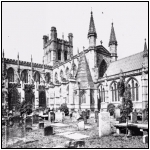
Several Norman features survive from this period including the Undercroft (c1140) which was probably used for storage and to accommodate the Abbot?s dependents and the Cloisters. These are arcaded walks around a central garden, where the monks wrote and studied, and were laid out in the 12thC. In the North Transept can be seen the late 11th C round arch and arcade. 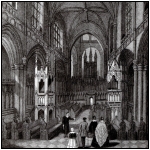
The Refectory ? the monk?s dining room ? dates from between 1225 and 1250. Here the monks ate their meals in silence whilst one of the brothers would read sacred texts to them from the wall pulpit. No meat was allowed except on church festivals and the only drink available was watered down beer. In the nearby Chapter House the monks would listen to a daily chapter from the Rule of St Benedict.
The two storey stone shrine to St Werburgh dates from about 1340 and was once brightly painted. It?s upper tier originally enclosed a jewel-encrusted casket housing the relics of the Saint and pilgrims would kneel in the niches around the base, hoping to receive cures for illnesses or pardon for their sins.
Work on the south side of the Nave began around 1360 but was postponed indefinitely when the Black Death wiped out almost a third of Britain?s population.Work resumed towards the end of the 15th century and up until 1876 the Nave was divided from the choir by a solid stone screen.
An unusual feature is the large South Transept, which was begun in the 14th century. This was used as the parish church of St Oswald up till 1881 ? complete with its own entrance, altar and bells, totally separate from the rest of the Cathedral.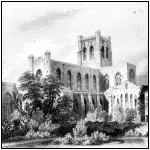
Until 1540 the Abbey was in the diocese of Lichfield. The monks attended daily services, cared for the sick and the poor and looked after travellers. Over time these standards slipped however and using these shortcomings as his reason, Henry VIII ordered its dissolution.
In 1541 the former abbey church was made the Cathedral of the newly formed diocese of Chester, the monks being succeeded by the Dean and Chapter. However, apart from paving the nave floor in 1600 little building work was carried out and damage during the Civil War in the 1640s went unrepaired. By 1696 the poor condition of the building was described as ?miserably ragged on the outside?.
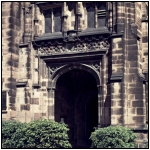 The first of four restorations began in 1818 but the most extensive work was done by Sir George Gilbert Scott between 1868 and 1876. He entirely re-cased the worn exterior, adding his own embellishments, such as turrets and pinnacles. The Nave, choir and Lady Chapel were also restored and many new features were added. Scott replaced the stone screen in the Nave with an open wooden one, enhancing the sense of space, and built the organ loft and case ? which many people think his best work.